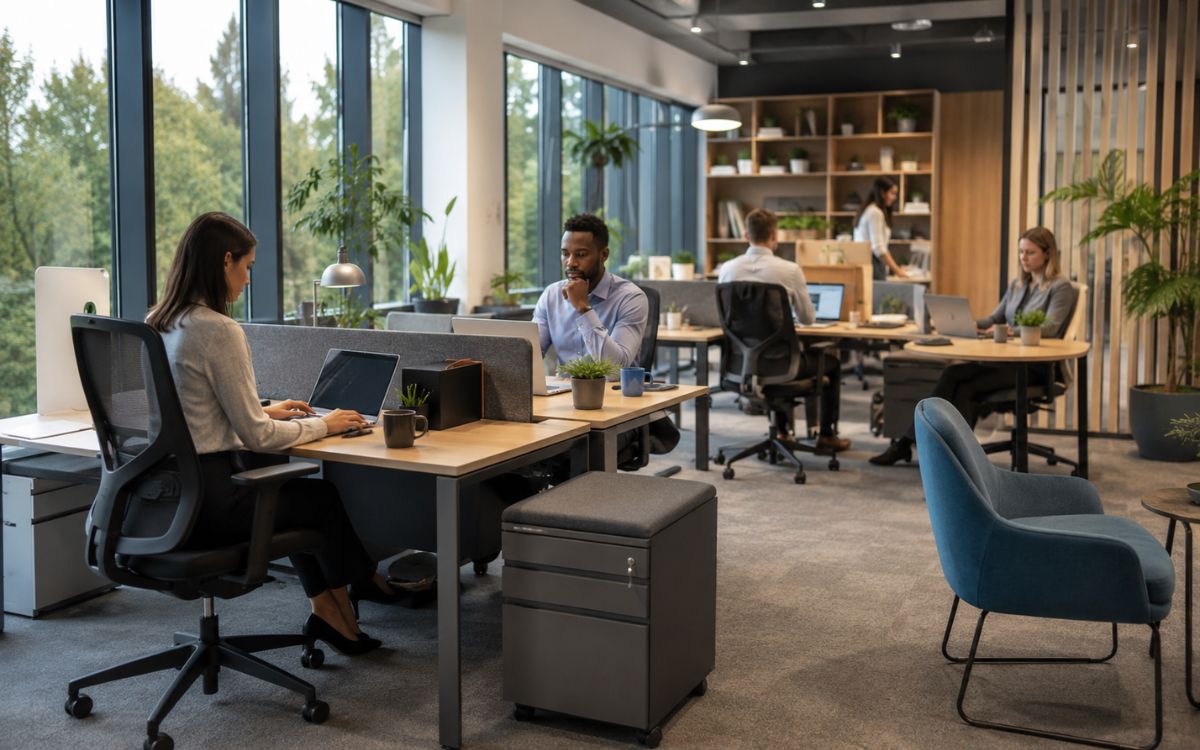
In the modern corporate landscape, the physical layout of your office does much more than just provide a place to sit. It acts as the backbone of your company culture, directly influencing how team members communicate, share ideas, and solve problems. When businesses prioritize open and intuitive design, they foster a sense of belonging and spontaneous creativity that closed, rigid offices often stifle.
Creating a space that encourages interaction does not mean abandoning privacy. Instead, it is about striking the right balance. By selecting the right 4 person workstation layouts or modular desk setups, teams can transition easily between focused individual work and collaborative brainstorming sessions.
Key Design Principles for Collaborative Spaces
To improve teamwork, you must first understand the natural flow of your office. A collaborative environment is one where team members feel comfortable approaching one another without disrupting the workflow of the entire department.
- Maximize Visibility: Use low-profile partitions or open-desk configurations that allow team members to see each other easily. This visual connection often leads to faster decision-making and better project alignment.
- Encourage Flexibility: Teams grow and projects change. Modular furniture that can be reconfigured based on current tasks or team size helps maintain a dynamic atmosphere.
- Integrate Shared Spaces: Every team needs an area for quick meetings. Incorporating casual breakout zones near workstations ensures that a brainstorming session can start the moment an idea occurs.
- Prioritize Ergonomics: A team cannot collaborate effectively if they are physically uncomfortable. Investing in ergonomic office chairs is essential to keep staff focused and energized throughout the day.
Choosing the Right Workstation Configuration
Not every team works the same way. Design choices should reflect the specific needs of your departments. For instance, developers or designers might need more space for multiple monitors, while marketing teams might benefit from face-to-face configurations that stimulate discussion.
When selecting your furniture, consider the social dynamics of your workforce. Open-plan clusters are excellent for creative teams, while linear configurations with smart acoustic buffering work best for departments that need to balance talk-time with intense focus. If you are setting up a new space, consulting with a professional office interior designer faridabad can provide tailored advice on maximizing your square footage without sacrificing the flow of traffic.
Common Mistakes to Avoid
One of the most frequent errors companies make is creating “too much” of one thing. An office that is entirely open can become noisy and distracting, leading to burnout. Conversely, an office that is too partitioned kills any chance of organic team bonding. Avoid these pitfalls by:
- Failing to provide quiet zones for confidential work or deep-focus tasks.
- Ignoring the need for proper cable management, which can turn an otherwise collaborative desk into a messy, uninviting space.
- Overloading floor plans, which creates congestion and makes it difficult for people to walk through the office to talk to colleagues.
Frequently Asked Questions
How do I decide between an open plan and cubicles?
The best choice depends on your team’s tasks. Open plans are ideal for collaborative, fast-paced work, while semi-private cubicles or desks with mid-height screens are better for roles that require significant deep focus and privacy throughout the day.
Can modular furniture really improve productivity?
Yes, by allowing the workspace to adapt to the project at hand. When furniture is flexible, teams spend less time worrying about their physical constraints and more time focusing on their goals.
What is the most important factor when choosing office furniture?
The most important factor is the comfort and well-being of your employees. When your team feels physically supported by their chairs and desks, they are naturally more engaged and collaborative.
Investing in your office environment is an investment in your team’s success. By choosing designs that promote movement, interaction, and physical comfort, you create a workplace that works for everyone. Whether you are looking for specific configurations or a complete office overhaul, focusing on the human element of your workspace design is the key to building a high-performing, connected team.